Blog
Mridanga vs. Kartal: The Instruments of Sankirtan Explained
Walk into any kirtan and you’ll hear them before you see them: the deep, rolling pulse of the mridanga underneath, and the bright, ringing clash of kartal on top. Together they carry sankirtan — congregational chanting of the holy names. Each plays a distinct role. Here’s what each instrument does, how they work together, and which one makes sense to start with.
What Is a Mridanga?
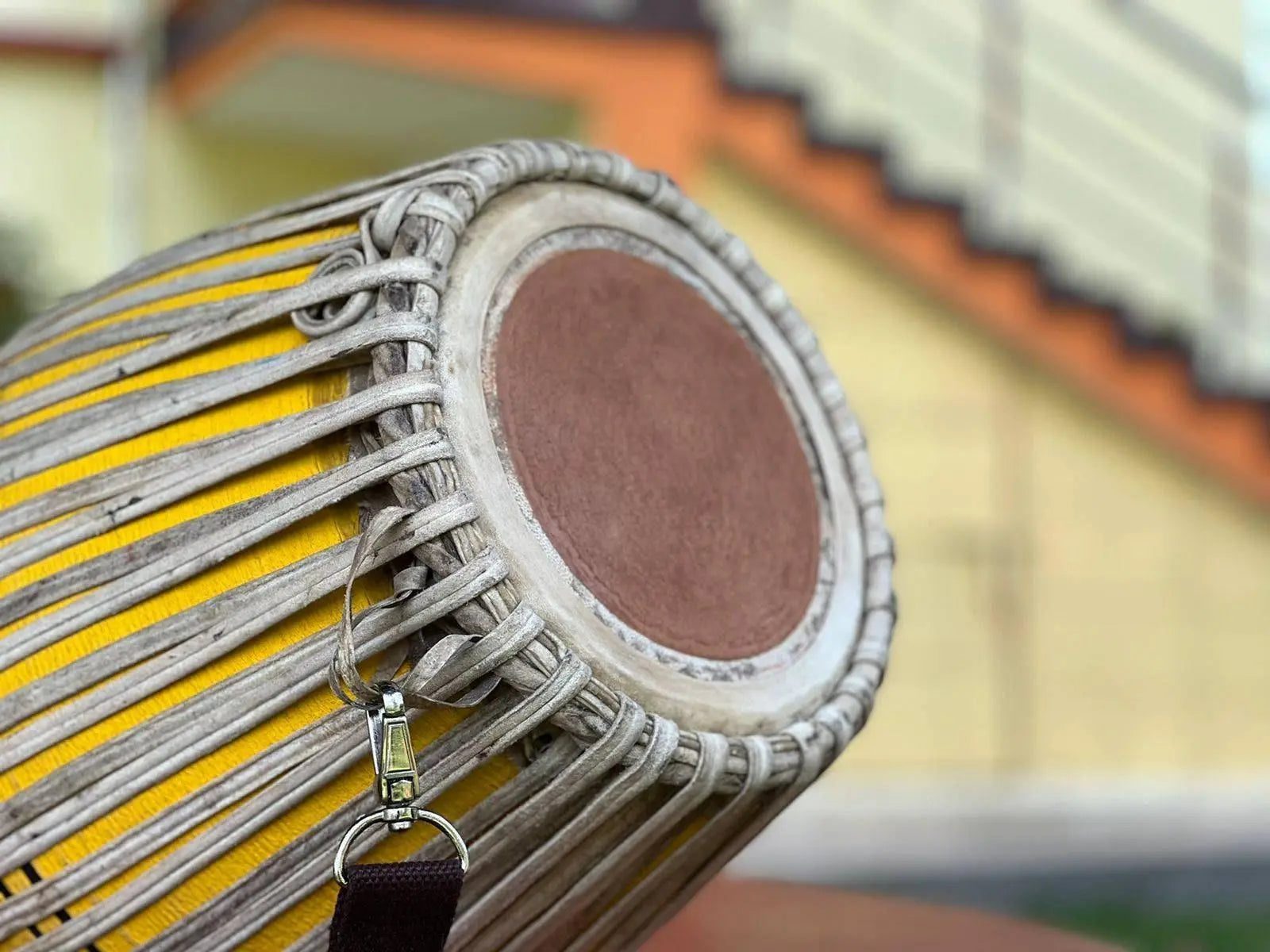
The mridanga is a two-headed drum, traditionally made from a single piece of wood or clay, with skins on both ends tuned to different pitches. Played horizontally across the lap, it sits at the rhythmic center of kirtan, setting the tala (rhythmic cycle) that everything else follows. Its sound ranges from deep bass tones on one head to sharp, resonant strokes on the other. That gives a single drum a surprisingly wide vocabulary.
In Gaudiya Vaishnava kirtan specifically, the mridanga isn’t just percussion. It’s considered an instrument of devotion in its own right, with its own traditional compositions and playing styles passed down through generations of players.
What Is a Kartal?
Kartal are small hand cymbals, played in pairs, one in each hand. They’re struck together to keep a bright, ringing rhythmic pulse above the mridanga’s beat. Unlike the mridanga, which typically takes years to play well, kartal are accessible almost immediately. Anyone in a kirtan can pick up a pair and join the rhythm within minutes.
That accessibility is exactly the point. Kartal are how an entire room, not just trained musicians, becomes part of the sankirtan, clapping the rhythm forward together.
How They Work Together in Kirtan
The mridanga leads the tala and drives the tempo. It often builds from a slow, meditative pace into faster, more ecstatic rhythms as kirtan progresses. Kartal ride on top of that structure, reinforcing the beat and giving every participant, not just the drummer, a way to physically join the rhythm. Neither instrument is complete without the other: a mridanga alone lacks the communal lift kartal bring, and kartal alone lack the rhythmic foundation the mridanga provides.
Which Should You Start With?
If you’re new to kirtan and want to participate right away, kartal are the natural starting point. Pick up a pair and you’re playing within your first kirtan. The mridanga rewards patience: it takes real practice to develop clean, controlled strokes. But it becomes the rhythmic anchor for everyone else once you do. Many devotees end up learning both over time, since each teaches you to listen to the other more closely.
Shop the Mridanga → | Shop Brass Kartal →
Frequently Asked Questions
Is a mridanga hard to learn?
It takes real practice to play well. Beginners can learn basic strokes and keep simple time fairly quickly, but fluency in traditional compositions takes longer, similar to any hand drum tradition.
Can anyone play kartal, even without musical experience?
Yes. Kartal are designed for group participation. Anyone can pick up a pair and join the rhythm of a kirtan almost immediately.
Do I need both instruments to join kirtan?
No. Kirtan is built around group participation, so singing along or clapping is enough. Instruments simply give you additional ways to take part.